
 Ask an Engineer
Ball Screw or Roller Screw — Which Linear Actuator Is Best?
By Kenny Green on June 2, 2026
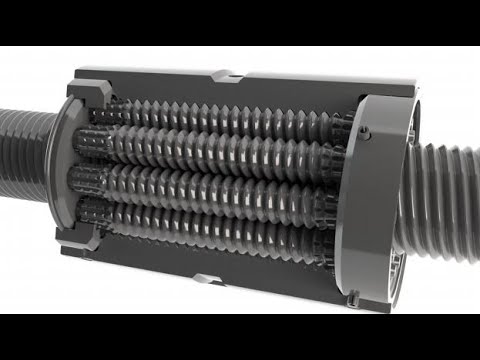
When designing an electric linear actuator or motion system, the choice of screw technology plays a critical role in performance, reliability, and total system cost. The most common high performance options are ball screws and roller screws. While both convert rotary motion into linear motion efficiently, their internal designs lead to meaningful differences in force capacity, speed capability, efficiency, Life, and cost.
This article breaks down those differences to help engineers and designers select the optimal solution for their application.
Screw Mechanisms
Both ball screws and roller screws rely on rolling contact, rather than sliding friction, to transfer load between the screw and nut. The difference lies in how the load is carried.
- Ball screws use recirculating ball bearings that roll between the threads of the screw and the nut.
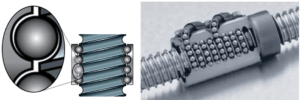
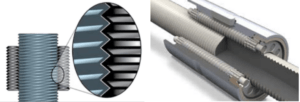
- Roller screws use multiple threaded rollers that engage the screw threads simultaneously, creating many more contact points.
Choosing Ball or Roller Screw Actuators
When evaluating whether a ball or roller screw mechanism is best for your application, consider the following:
- Force Capability
- Speed and Acceleration
- Efficiency and Heat Generation
- Total Cost
- Operational Life
Force Capability
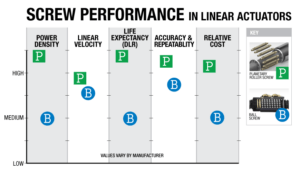
In high force applications Roller screws excel. Since force is distributed across multiple threaded rollers there is a high amount of surface area contact between the nut and the screw. This allows roller screws to transmit much higher forces within the same envelope size as a ball screw and with less stress on individual rolling elements.
Ball screws, while still very capable of medium to high forces, are limited by the number of balls in the nut and the size of the recirculating ball tracks. Increasing force capacity typically requires a larger screw diameter or more ball bearings and a longer nut length.
Summary:
- Roller screws: High to very high force, more compact design
- Ball screws: Medium to high force
Speed and Acceleration
Ball screws are well suited for high linear speeds and smooth motion. However, ball velocity within the geometry of recirculation paths becomes a limiting factor for overall top speed. At high speeds the balls bearings can impact the turns on the recirculating loop with enough force to cause the ball bearings to stop or slide, instead of rolling through the turn.
Roller screws have a slight edge with high speeds, as their rolling threads do not need to recirculate through a loop, allowing them to operate reliably at higher speeds. This design difference also allows for higher acceleration rates with Roller screws compared to Ball Screws.
Summary:
- Roller screws: High speed, High acceleration
- Ball screws: Moderate to High speed, Moderate acceleration
Efficiency and Heat Generation
Ball screws typically achieve efficiencies around 90%, making them one of the most energy efficient mechanical screw option. This high efficiency reduces motor torque requirements and minimizes heat generation from friction, allowing ball screws to be used in continuous operation without much need for additional cooling measures
Roller screws, due to their increased contact points, usually operate at lower efficiencies, often around 80-85%. While still very efficient, this decrease in efficiency results in higher heat generation especially when operating in combined high load and high speed environments. This increased heat generation can require additional cooling measures like reduced cycle times or additional dwell times between moves
Summary:
- Ball screws: Highest efficiency
- Roller screws: High efficiency, increased heat generation
Operation Life
When it comes to long operational life roller screws are at top of all screw technology. This is mostly due to a combination of hardened thread material and increased contact surface area. Roller screws have an operational life that can be up to 10 times higher than a comparable ball screw.
While not having a ratings as high as roller screws, ball screws are still very capable when it comes to the life of the screw. Additionally, just like with roller screws most ball screws have a published Dynamic Load Rating that allows for reliable calculations of estimated operational life
Summary:
- Roller screws: High life rating
- Ball screws: Medium life rating
Total Cost
Ball screws are widely used, standardized, and available in many configurations, making them a cost effective solution for a broad range of applications. They are an excellent fit when force and life requirements are well within their capabilities.
Roller screws are a more expensive screw technology. Their complex manufacturing process, precision ground components, and longer life expectations result in a higher initial investment. However, in applications requiring higher force or longer life, roller screws will often reduce total cost of ownership by extending service intervals and improving reliability.
Summary:
- Ball screws: Lower upfront cost
- Roller screws: Higher upfront cost, lower long term cost
Final Considerations
Both and Ball and Roller screws are capable technologies for converting rotary motion and torque into linear movement and force within an actuator. A choice between the two options should be dependent upon the application requirements of the system, including forces, speeds, size restrictions, system life, and overall cost.
In general Ball screw are a good choice if your system requires higher efficiency, moderate to high force, and a lower initial cost point. For most other applications Roller screws are the best pick and work well in most demanding applications that require high forces, long life, high speeds, and a lower long term cost investment.
Read our Guide for Selecting the Optimal Screw Technology to learn more.